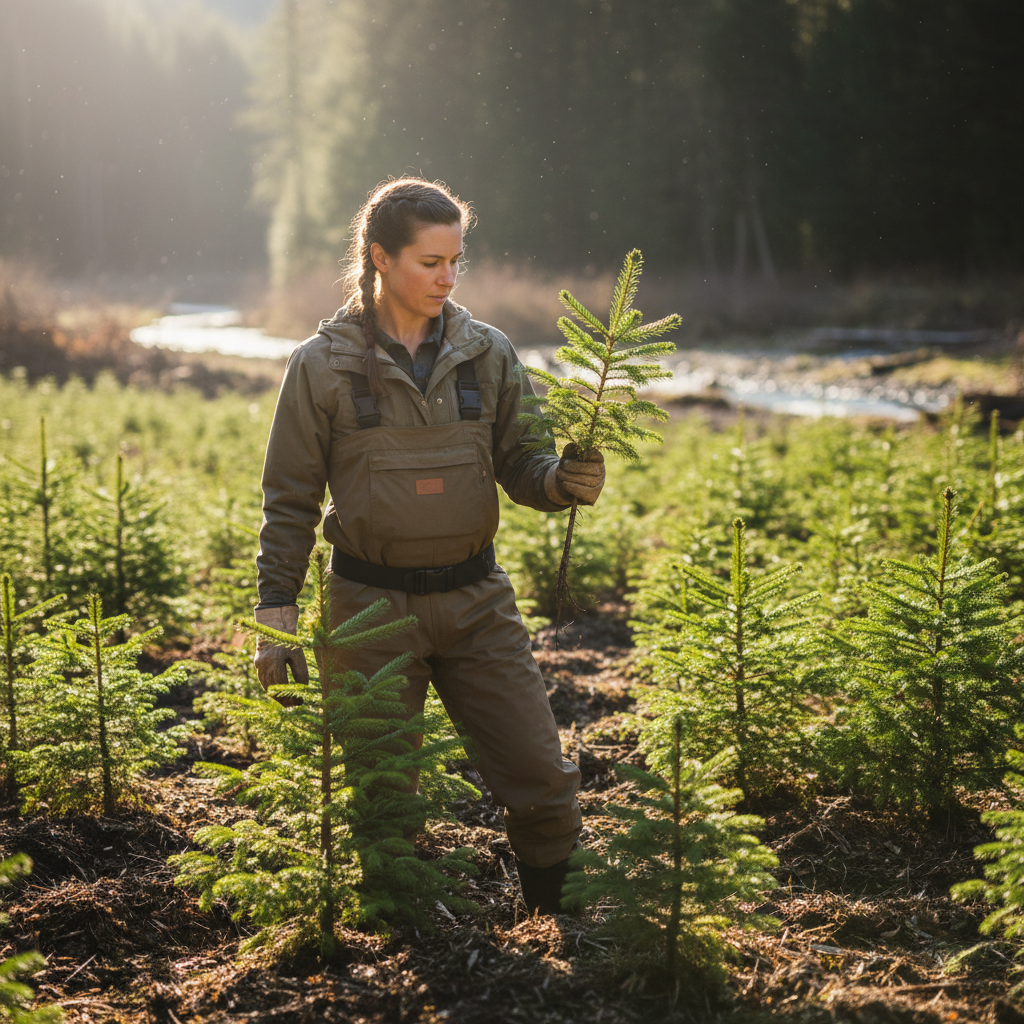
"We planted 40,000 Douglas fir here. The elk came back in eighteen months."
Marisol Reyes
Watershed Restoration Coordinator · Grove since 2019
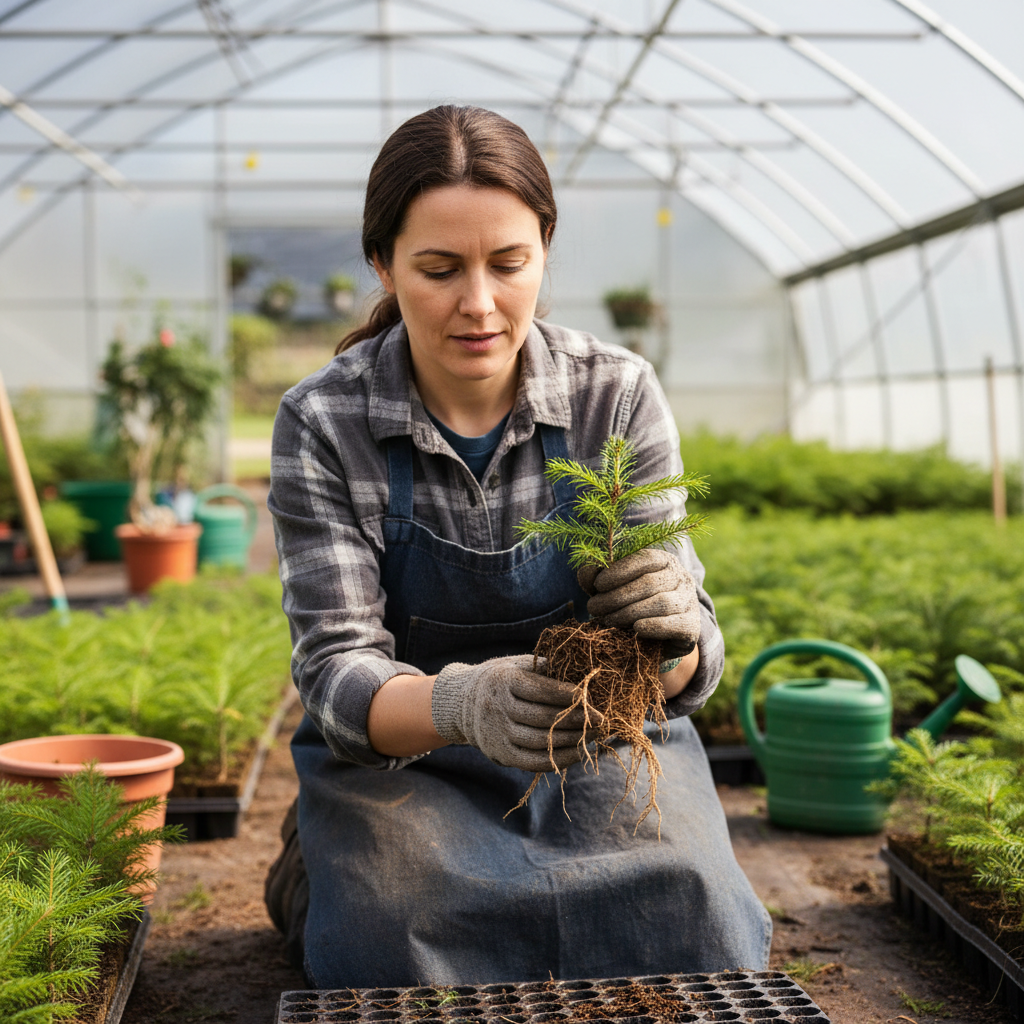
Ingrid Halvorsen
Nursery Manager · Pacific Northwest Division
"Every root tip is a decision. If it spirals, the tree suffers for decades."
Ingrid has spent eleven years perfecting the conditions that give seedlings their best chance before they ever touch open ground. Her greenhouse in the Willamette Valley holds 200,000 seedlings at peak season — Douglas fir, western red cedar, bigleaf maple — each one started from locally-sourced seed to preserve the genetic memory of the watershed it will return to.
200K
Seedlings grown last season
97%
First-year survival rate
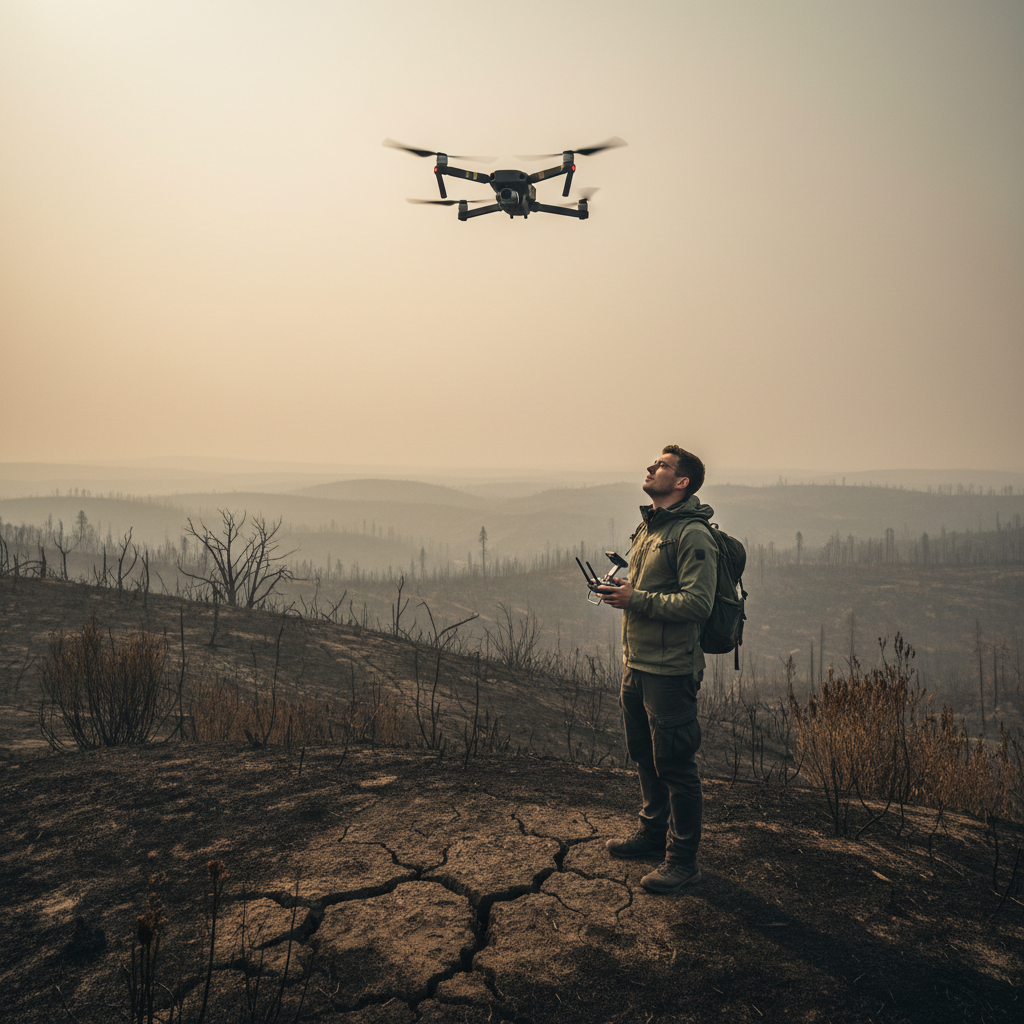
Tomás Guerrero
Aerial Survey Lead · Post-Fire Response Team
"The drone sees erosion channels forming before the first rain arrives. That is when we can still act."
Before a single sapling goes in the ground, Tomás flies it. His LiDAR surveys map slope angles, soil compaction, and residual seed banks at 4-centimeter resolution — the data that determines species selection, spacing, and planting sequence. Last year his team surveyed 47,000 acres across three post-fire landscapes, producing planting plans that reduced erosion runoff by 62% in the first growing season.
47K
Acres surveyed last year
62%
Erosion runoff reduction
The scale of the work
Individual hands become crews, become aerial surveys, become recovering hillsides. Here is how a single planting site transforms across five years.
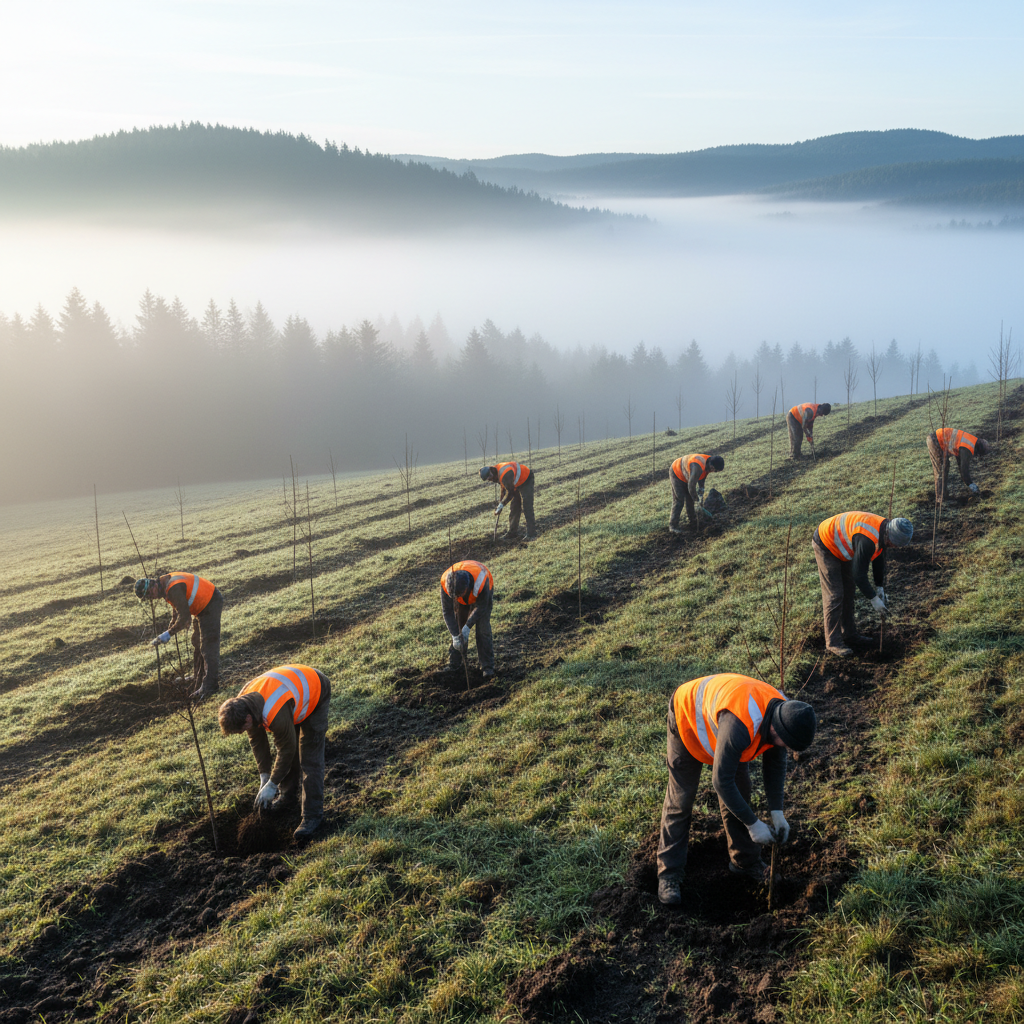
Crew 7, Deschutes Watershed — October 2025
8 people · 4,200 trees planted over 5 days
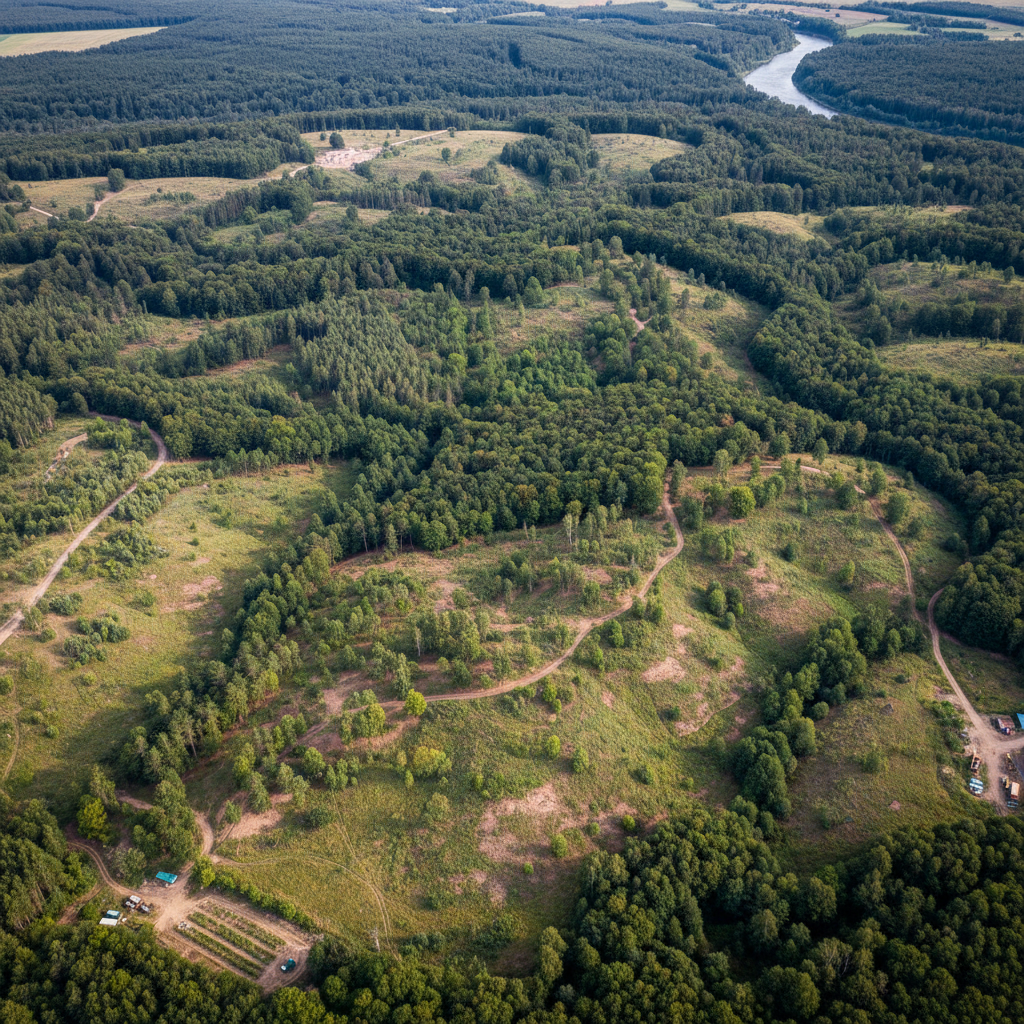
Aerial survey — 1,200 acres · Clackamas Watershed
Five years on one hillside
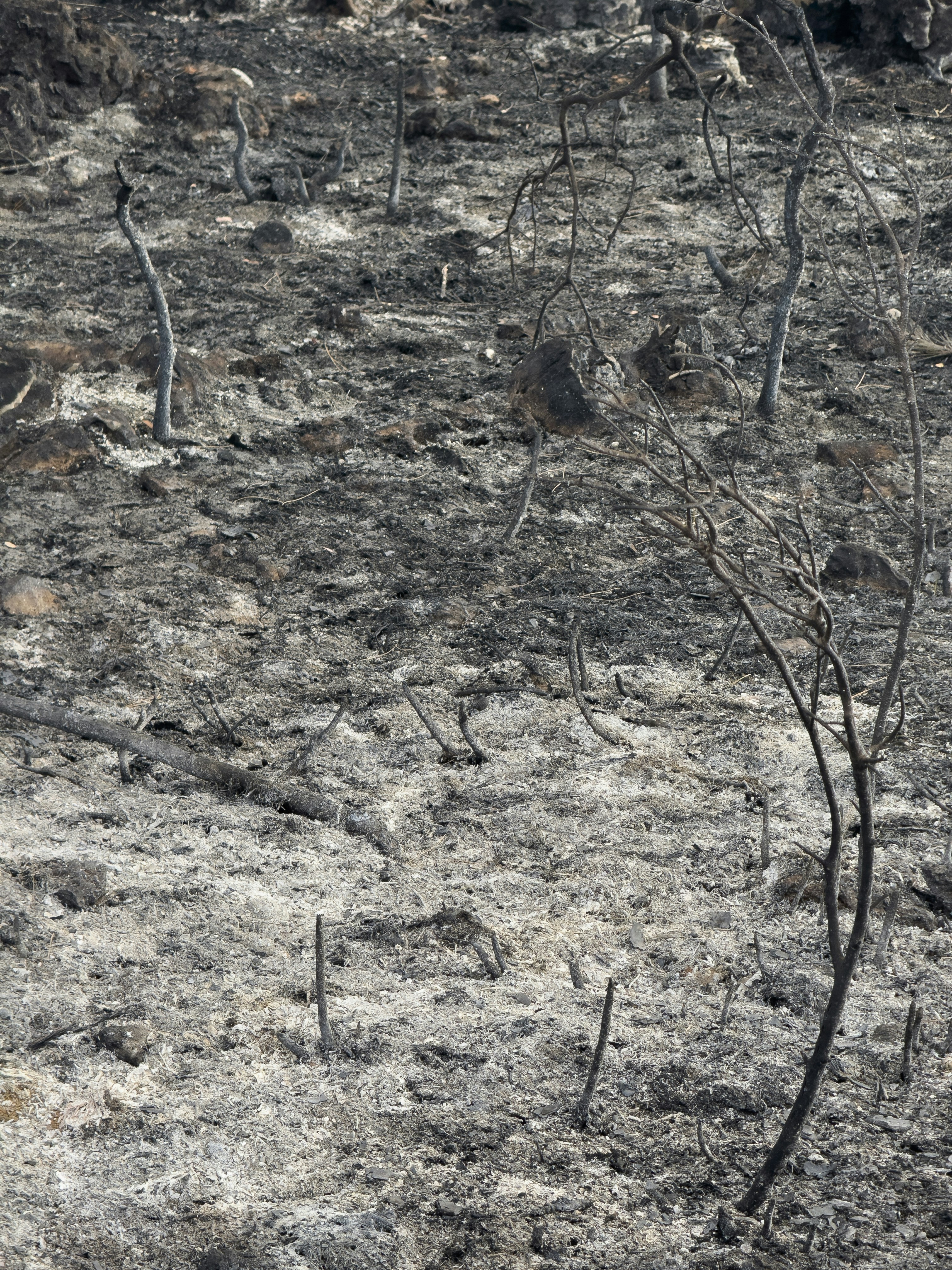
Bare hillside after wildfire
Ash soil, zero canopy, active erosion on 30° slopes. Tomás maps the site. Ingrid begins seed collection.
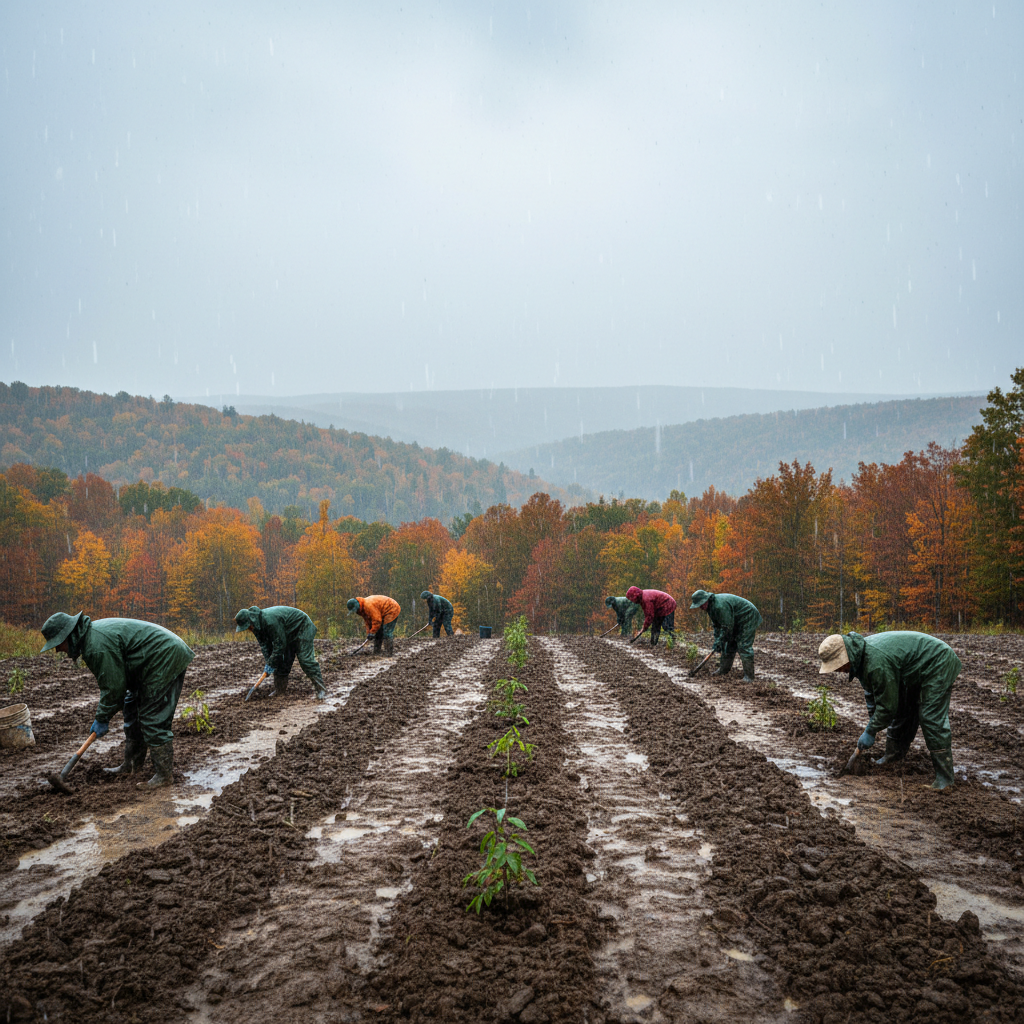
12,000 saplings planted
Douglas fir, red alder, and native shrubs go in during the October rain window. Crews of eight work five-day rotations.
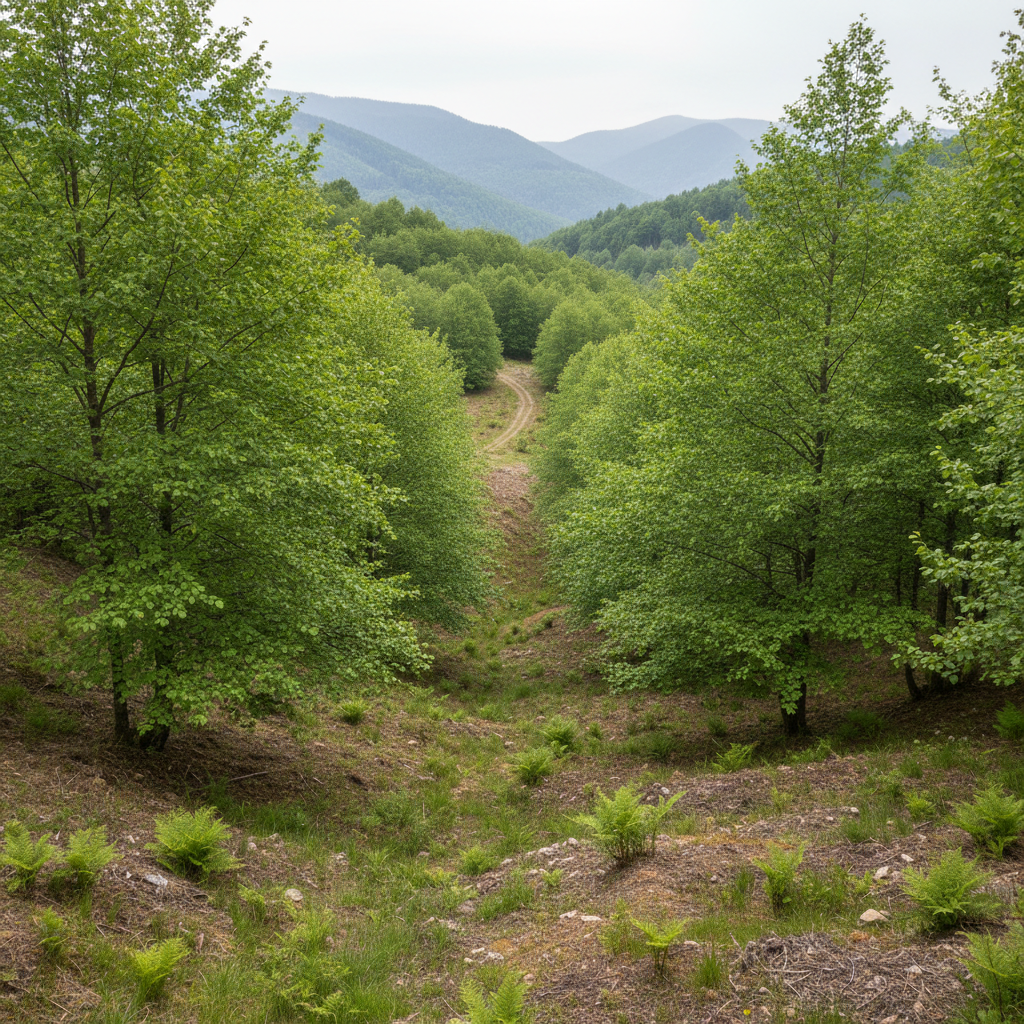
First canopy closure begins
Alders reach 8 feet. Nitrogen fixing begins. Elk tracks appear at the creek crossing. Marisol records the first spotted owl call.
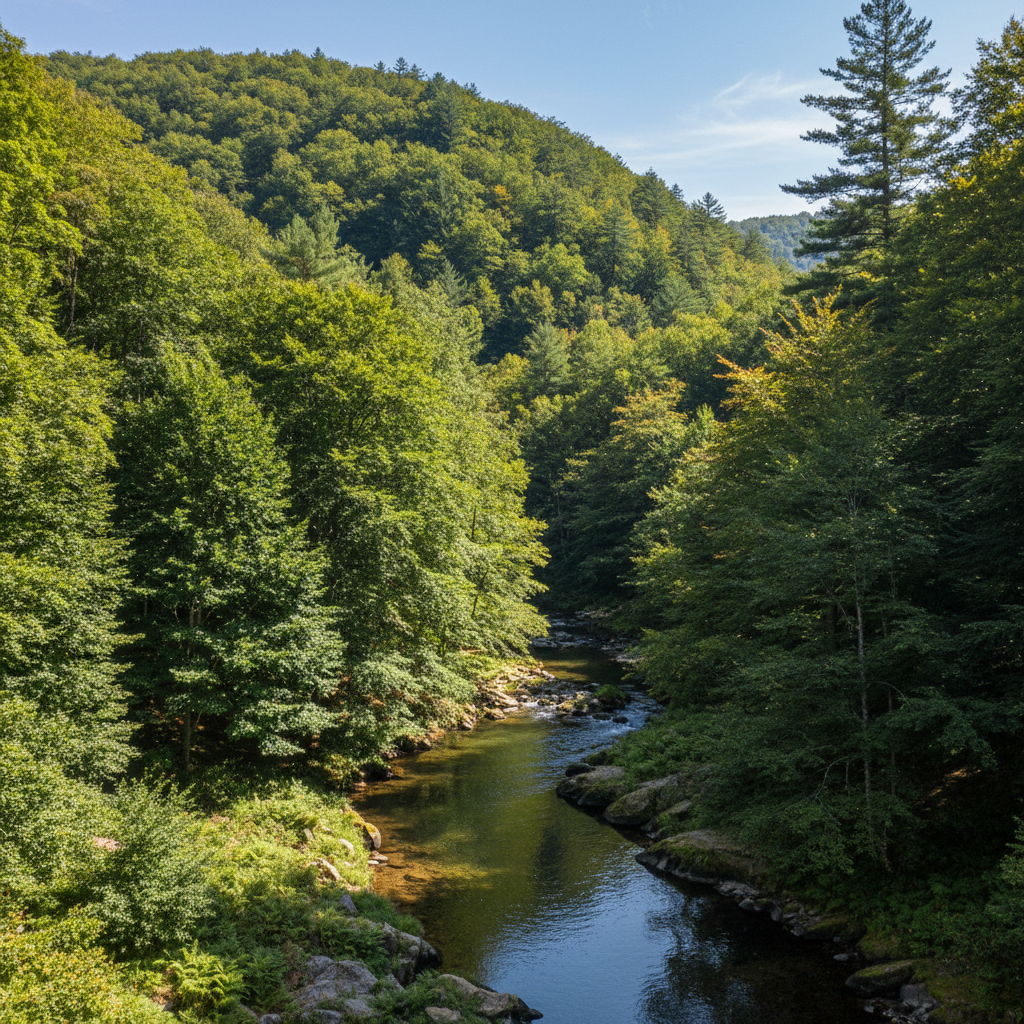
Watershed function restored
Stream temperature down 4°C. Salmon redds reappear in the lower reach. The hillside holds rain. The site is closed to new planting.
Bare hillside after wildfire
Ash soil, zero canopy, active erosion on 30° slopes. Tomás maps the site. Ingrid begins seed collection.
12,000 saplings planted
Douglas fir, red alder, and native shrubs go in during the October rain window. Crews of eight work five-day rotations.
First canopy closure begins
Alders reach 8 feet. Nitrogen fixing begins. Elk tracks appear at the creek crossing. Marisol records the first spotted owl call.
Watershed function restored
Stream temperature down 4°C. Salmon redds reappear in the lower reach. The hillside holds rain. The site is closed to new planting.
The form is just the introduction
You've met the team. Now tell us who you are. Every partnership starts with a conversation — not a contract.
Grove by the numbers
14 yrs
In the field
$0
Admin overhead on site donations
8 states
Active restoration sites
100%
Native species only
"We were skeptical of carbon offset programs. Grove brought us to the site. We walked it. We funded it. That was three years ago — we've been back every spring since."
David Kim
Head of Sustainability · Cascadia Materials, Portland